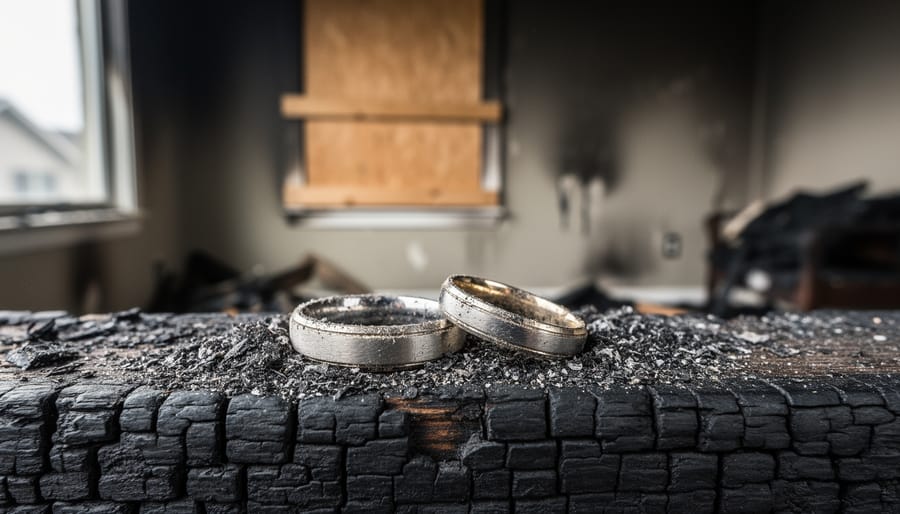
Fire Damaged Your Matrimonial Home During Divorce? Here’s What Happens to Your Property Settlement
Document the fire damage immediately with photographs and video from multiple angles, noting the date and extent of structural harm, contents loss, and any safety hazards. Contact your insurance company within 24 hours to file a claim, even if you and your spouse disagree about next steps—delayed reporting can jeopardize coverage. While fire damaged property buyers UK operate under different regulations, Ontario’s Family Law Act governs how insurance proceeds and restoration decisions are handled between separating spouses, requiring careful navigation of equalization rights. Secure the property by boarding windows, tarping roof damage, and preventing further deterioration, keeping all receipts as these emergency mitigation costs are typically reimbursable.
Notify your family law lawyer immediately, as fire damage to your matrimonial home creates urgent legal implications for property division, especially if you’re mid-proceeding.
When fire strikes during divorce, three critical timelines converge: insurance claim deadlines, legal obligations to preserve marital assets, and decisions about rebuilding versus selling. The emotional weight of losing your home compounds the already difficult separation process, yet swift, informed action protects your financial interests and legal rights.
Understanding whether insurance proceeds remain part of the matrimonial property, who has authority to contract repairs, how restoration costs affect net family property calculations, and what happens if one spouse wants to rebuild while the other prefers to sell determines your financial future. The intersection of property law, insurance regulations, and family law creates complexity requiring specialized guidance—and the decisions you make in the first 72 hours after the fire often prove most consequential to the final outcome of your divorce settlement.
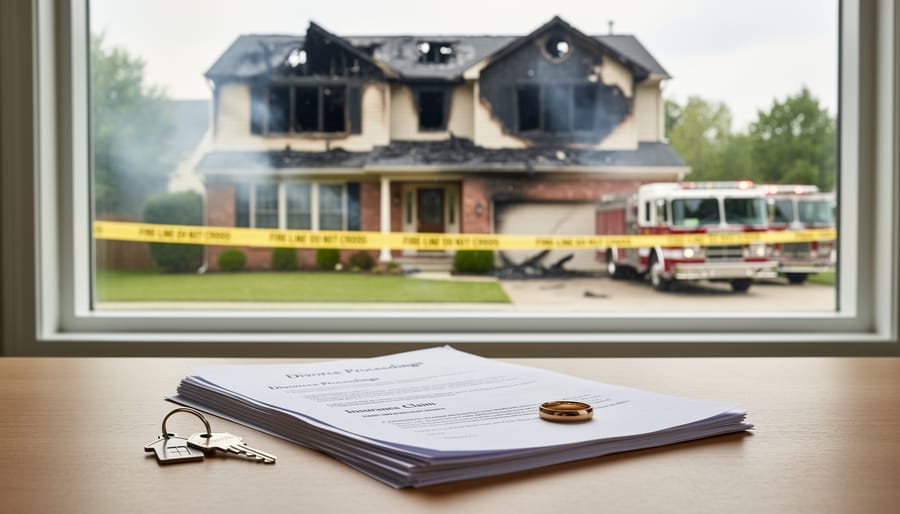
Understanding Matrimonial Home Status After Fire Damage
The Matrimonial Home Remains Protected
When fire damages your matrimonial home during divorce proceedings, it’s essential to understand that the legal protections surrounding this property remain intact. Under Ontario’s Family Law Act, the matrimonial home holds a unique status that fire damage does not eliminate. Both spouses retain equal rights to possession of the property, regardless of whose name appears on the title and despite the physical condition of the structure.
This protection means that neither spouse can unilaterally decide to sell the damaged property, demolish what remains, or prevent the other from accessing the site without proper legal authority. Even if the home is uninhabitable, your property division rights continue to apply to both the land and any insurance proceeds received.
The matrimonial home’s protected status also affects decisions about repairs, reconstruction, or demolition. Major decisions typically require either mutual agreement or a court order. This safeguard exists to prevent one spouse from making choices that could disadvantage the other during property division negotiations.
Understanding these ongoing protections is crucial when navigating the intersection of fire damage and divorce. We encourage you to schedule a free consultation with our experienced family law team to discuss how these protections specifically apply to your situation and ensure your interests remain protected throughout this challenging time.
When Complete Destruction Changes Everything
When a fire completely destroys the matrimonial home, the nature of the asset itself fundamentally changes. What was once tangible real property becomes something entirely different: insurance proceeds, the underlying land value, or in some cases, nothing at all if insurance coverage was inadequate or disputed.
This transformation carries significant implications for property division. Insurance proceeds are typically treated as a divisible asset, much like the home itself would have been. However, the timeline for receiving these funds can extend months beyond what divorcing spouses might anticipate, creating financial strain during an already difficult period. The land beneath the destroyed structure retains value, but determining whether to sell as-is, rebuild before dividing, or negotiate one spouse buying out the other’s interest requires careful consideration of each party’s financial position and future plans.
Total loss scenarios often introduce unexpected complications. If one spouse held separate insurance policies or if the coverage was insufficient, disputes may arise about responsibility for the shortfall. Questions about whether to rebuild, who makes that decision, and how construction costs affect the equalization payment become central concerns requiring legal guidance and, often, mediation to resolve fairly and efficiently.
Insurance Proceeds and Property Division
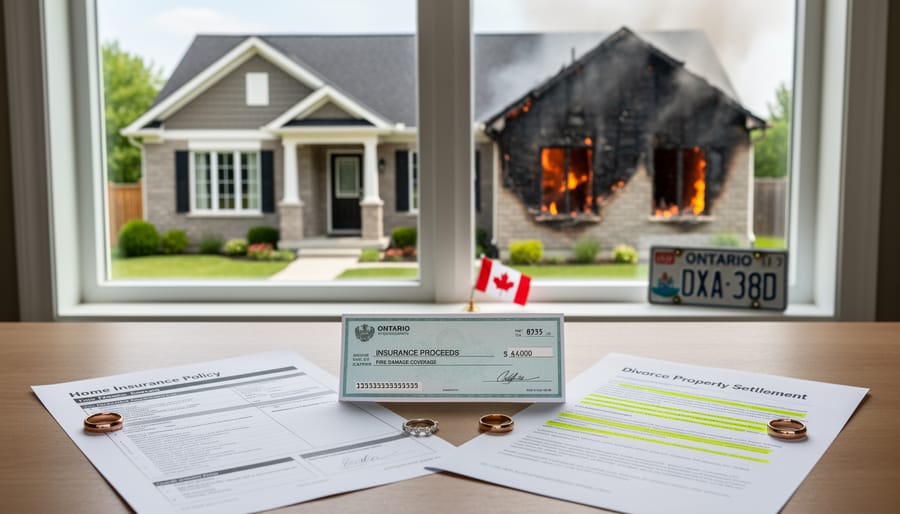
Who Receives the Insurance Payment?
Understanding who receives insurance proceeds after fire damage to your matrimonial home during separation depends largely on how the property insurance policy is structured and who holds legal ownership.
Typically, the insurance policy is held in the name of the registered property owner or owners. If both spouses are named on the title, both are usually named insureds on the homeowner’s policy. When a claim is processed, the insurance company generally issues payment to all named policy holders jointly. This means the cheque will be made payable to both spouses, requiring both signatures for deposit or cashing.
If only one spouse holds title and is the sole named insured, that individual will receive the insurance proceeds directly. However, this doesn’t necessarily mean they have exclusive rights to those funds. Under Ontario’s Family Law Act, the matrimonial home receives special treatment in property division, regardless of whose name appears on title. Insurance proceeds meant to repair or replace the home are considered part of the matrimonial property subject to equalization.
When you’re separating, it’s essential to notify your insurance provider about your change in marital status. This ensures proper distribution of any claims and prevents disputes. If fire damage occurs during your separation, the insurance company may hold the proceeds in trust until you and your spouse reach an agreement or obtain a court order directing how the funds should be distributed.
We understand this situation adds financial uncertainty to an already stressful time. Contact us for a free consultation to discuss protecting your interests in insurance proceeds.
Insurance Money as a Divisible Asset
When fire damages your matrimonial home during divorce proceedings, any insurance settlement you receive becomes part of your net family property calculation. Under Ontario’s Family Law Act, insurance proceeds are treated as an asset that must be divided equitably between spouses, regardless of whose name appears on the policy.
The valuation date for insurance money is typically the date of separation, though fire damage occurring afterward creates unique considerations. If your insurer pays out a settlement after separation, that money generally gets added to the net family property of the spouse who held the insurance policy. However, both parties retain rights to an equalization payment that reflects their share of all accumulated assets during the marriage.
Insurance settlements may cover several components: structural repairs, contents replacement, additional living expenses, and loss of use. Each category receives distinct treatment in property division calculations. For instance, funds designated specifically for rebuilding the home typically remain tied to the property itself, while compensation for lost personal belongings may be divided based on ownership.
Understanding how insurance proceeds affect your equalization payment requires careful documentation. Your family lawyer will review the insurance adjuster’s breakdown, ensuring that shared contributions to premiums throughout your marriage are properly recognized. We encourage you to schedule a free consultation to discuss how your specific insurance settlement impacts your overall property division and what steps protect your financial interests during this challenging time.
Protecting Your Interests During the Claims Process
When fire damages your matrimonial home during divorce proceedings, maintaining transparency throughout the insurance claims process protects both spouses from potential financial harm. Both parties have a legal interest in the property and should remain fully informed about all communications with the insurance company, damage assessments, and settlement negotiations.
Request that both spouses receive copies of all insurance correspondence, adjuster reports, and settlement offers directly. This prevents situations where one spouse controls information flow and potentially makes decisions that disadvantage the other. If you suspect your spouse is withholding information or negotiating independently, contact your family lawyer immediately.
Consider retaining an independent insurance adjuster to provide an objective assessment of the damage and repair costs. Insurance companies may minimize payouts, and having your own expert ensures the claim accurately reflects the home’s true losses. Both spouses should participate in property inspections and meetings with adjusters whenever possible.
Avoiding common divorce mistakes means documenting everything related to the claim. Keep detailed records of all expenses, temporary repairs, and communications. If settlement funds are released, ensure they’re deposited into a joint account or held in trust by your lawyer until property division is finalized.
A free consultation with an experienced family lawyer can clarify your rights and establish protective measures tailored to your unique circumstances during this challenging time.
Valuation Challenges: Before Fire vs. After Fire
The Valuation Date Dilemma
When your matrimonial home suffers fire damage, determining which value applies for property division purposes depends critically on timing. Under Ontario’s Family Law Act, the valuation date is typically the date of separation. This means the condition and value of your home on that specific date becomes the foundation for equalization calculations.
If the fire occurred before you and your spouse separated, the damaged condition and reduced value would generally apply for equalization purposes. The home’s worth is assessed as it existed on the separation date, reflecting the fire damage. Conversely, if the fire happened after separation, the original pre-fire value on the separation date typically governs the equalization calculation, even though the physical home no longer exists in that condition.
This timing distinction can create significant financial implications. Consider a scenario where your home was worth $800,000 before separation, but fire damage reduced its value to $500,000. If separation occurred after the fire, you would divide based on the lower value. If separation preceded the fire, the higher pre-fire value would apply for equalization, though insurance proceeds become a separate consideration.
Understanding these timing nuances is essential, as they directly affect what you may owe or receive in equalization payments. Given the complexity of these determinations, particularly when dates are disputed or unclear, we encourage you to book a free consultation with our experienced family law team to assess your specific situation.
Obtaining Accurate Damage Assessments
When fire damages your matrimonial home during divorce proceedings, establishing its accurate value becomes essential for fair property division. This process requires collaboration with multiple professionals who each bring specialized expertise to the assessment.
Begin by engaging a certified property appraiser experienced in valuing fire-damaged properties. These specialists understand how to assess both pre-fire market value and post-damage worth, providing crucial data for settlement negotiations. Request a detailed report that outlines the property’s condition, comparable sales in your area, and estimated repair costs versus replacement value.
Working with licensed contractors is equally important. Obtain multiple written estimates for restoration work, as these figures directly impact the home’s current market value. Contractors can identify whether the damage is superficial or structural, information that significantly affects both valuation and decision-making about repair versus sale.
Your insurance adjuster plays a pivotal role in this process. Maintain open communication and document all interactions carefully. Insurance assessments determine coverage amounts and influence how proceeds are divided between spouses. If you disagree with the adjuster’s evaluation, you have the right to hire an independent adjuster to advocate for a fair settlement.
Keep comprehensive records of all assessments, estimates, and correspondence. These documents become invaluable during property division negotiations and may be required if court intervention becomes necessary. Consider scheduling a free consultation with a family law professional who can help you understand how these valuations impact your specific situation and ensure all assessments align with Ontario’s equalization requirements.

Rebuilding Decisions: Who Decides What Happens Next?
Joint Decision-Making Requirements
When your matrimonial home has sustained fire damage during divorce proceedings, both spouses typically retain equal decision-making authority regarding the property until a court orders otherwise or you reach a mutual agreement. This shared responsibility means that major decisions about the damaged home—including whether to repair, rebuild, demolish, or sell the property—generally require the consent of both parties.
Ontario family law recognizes that the matrimonial home holds special status. Even if only one spouse holds legal title, both parties have occupancy rights and corresponding responsibilities. When fire damage occurs, neither spouse can unilaterally make significant decisions that would materially affect the property’s value or condition without the other’s agreement or a court order authorizing such action.
This mutual consent requirement extends to decisions about insurance claim settlements, contractor selection for repairs, temporary protective measures beyond emergency stabilization, and sale negotiations. While emergency repairs to prevent further damage or safety hazards may proceed without explicit consent, substantial restoration work typically requires both spouses to participate in the decision-making process.
If you and your spouse cannot agree on how to proceed with the fire-damaged property, you may need to seek court intervention through a motion for directions. The court can authorize specific actions or appoint a representative to make decisions in the property’s best interests. We understand this added layer of complexity during an already challenging time, and we encourage you to contact us for a free consultation to discuss your specific situation and protect your rights.
Court Intervention When Spouses Disagree
When spouses cannot reach agreement on how to handle a fire-damaged matrimonial home, court intervention becomes necessary to resolve the impasse. You have the right to bring a motion before the Ontario Superior Court of Justice seeking specific directions regarding the property’s disposition.
The court has broad authority under the Family Law Act to make orders that are just and equitable in the circumstances. A judge may order the home to be sold in its damaged condition, require one party to buy out the other’s interest, or direct that repairs be completed before disposition. The court will consider factors including each party’s financial capacity, the feasibility of rebuilding, insurance coverage availability, and the overall fairness of the proposed solution.
To obtain a court order, you’ll need to file a motion with supporting documentation, including damage assessments, insurance information, and financial disclosure. The court may also appoint an independent expert to provide recommendations on the most appropriate course of action.
This process can be emotionally draining when you’re already navigating divorce. We understand the urgency and stress you’re experiencing. Our compassionate legal team has helped numerous clients successfully resolve property disputes involving damaged homes. We encourage you to contact us for a free consultation to discuss your specific situation and explore your options for obtaining timely court intervention that protects your interests.
Mortgage and Debt Obligations on Fire-Damaged Property
Continuing Payment Responsibilities
When fire damages your matrimonial home during divorce proceedings, you and your spouse remain legally bound to continue making mortgage payments and servicing other secured debts attached to the property. This obligation persists regardless of the property’s condition or whether it remains habitable. Financial institutions will not suspend or forgive these payments simply because the home has been damaged, and failure to maintain these obligations can result in serious consequences including foreclosure, damaged credit ratings, and potential liability for deficiency balances.
Understanding your debt obligations in divorce becomes especially critical when property damage complicates an already difficult situation. Both spouses typically share responsibility for these payments until the property is officially divided through court order or separation agreement, even if one spouse has moved out or neither party currently occupies the home.
If insurance proceeds are available, they may provide temporary relief for meeting these financial obligations. However, these funds are often held in trust pending resolution of repair versus rebuild decisions, making it essential to establish a clear payment plan between spouses. We encourage you to contact us for a free consultation to discuss strategies for managing these continuing obligations while protecting your financial interests and credit standing throughout this challenging time.
Insurance Proceeds Applied to Outstanding Mortgages
When your matrimonial home sustains fire damage, understanding how insurance proceeds are distributed becomes critical to fair property division. In most cases, mortgage lenders hold a priority claim on insurance payouts, which can significantly impact the funds available to you and your spouse.
If your home carries an outstanding mortgage, your lender is typically listed as a loss payee on your insurance policy. This means the insurance company will issue proceeds jointly to you and your mortgage holder. The lender has the contractual right to apply these funds directly toward the mortgage balance, particularly if the property is deemed a total loss or if repairs would exceed the home’s remaining value.
This priority right exists because the lender’s security interest in the property must be protected. Even during divorce proceedings, the mortgage remains a joint obligation that takes precedence over equitable division between spouses. If insurance proceeds are $200,000 and your mortgage balance is $180,000, only $20,000 would remain available for division or reconstruction decisions.
The timing of these payments matters considerably. Insurance companies often release funds in stages during reconstruction, or as a lump sum for total losses. Your family law lawyer can help you understand how these lender rights affect your net family property calculation and negotiate appropriate adjustments to ensure fair division despite reduced available funds.
Protecting Your Rights: Immediate Steps After Fire Damage
Document Everything
When your matrimonial home suffers fire damage during divorce proceedings, thorough documentation becomes essential for protecting your legal and financial interests. Begin by taking comprehensive photographs and videos of all damage immediately after receiving clearance from emergency services to safely enter the property. Capture wide-angle shots of each room, close-ups of specific damage, and detailed images of damaged personal belongings that hold sentimental or financial value.
Maintain a detailed written inventory describing the extent of destruction to the structure and contents. Date-stamp all documentation and create multiple backup copies stored in separate locations, including cloud-based storage. This evidence serves dual purposes: supporting your insurance claim and establishing the condition of the matrimonial property for division proceedings.
Preserve all correspondence with insurance adjusters, contractors, and your spouse regarding the damage. Keep receipts for temporary accommodation, emergency repairs, and replacement items. These records directly impact how insurance proceeds are allocated and may influence spousal support calculations if one party faces unexpected housing costs. Your documentation creates an objective record that courts and insurance companies rely upon when disputes arise about property value or the handling of proceeds.
Notify Your Divorce Lawyer Immediately
When fire damages your matrimonial home during divorce proceedings, contacting your family law lawyer immediately becomes essential to protecting your interests. Time-sensitive decisions about insurance claims, property repairs, and communication with adjusters can significantly impact the financial outcome of your property division.
Your lawyer can guide you through the complexities of dealing with insurance companies while ensuring your rights remain protected throughout the claims process. They understand how fire damage affects pending property valuations and can advise on whether existing equalization calculations need adjustment. Without prompt legal consultation, you risk making statements or decisions that could inadvertently compromise your position in the divorce settlement.
Additionally, your lawyer can help coordinate communication between you and your spouse regarding immediate decisions about the property, establishing clear protocols for handling contractors, insurance adjusters, and repair estimates. This professional guidance becomes particularly valuable when emotions run high and cooperative decision-making proves challenging.
Many family law firms offer free consultations to assess your specific situation and provide initial direction during this overwhelming time, ensuring you take appropriate protective steps from the outset.

Common Disputes and How Courts Resolve Them
When fire damages your matrimonial home during divorce proceedings, several common disputes typically emerge, each requiring careful legal resolution. Understanding how Ontario family courts approach these conflicts can help you navigate this challenging situation with greater confidence.
One of the most frequent disputes involves disagreement over whether to repair or sell the fire-damaged property. One spouse may wish to rebuild and retain the home for sentimental reasons or because they intend to remain there with the children, while the other prefers immediate sale to access their share of equity. Ontario courts generally examine what serves the best interests of any children involved, the financial feasibility of repairs, and whether one party can afford to buy out the other’s interest. In cases where neither party can agree, courts often order the property sold and proceeds divided according to the family law equalization framework.
Insurance proceeds allocation represents another major area of contention. Disputes arise when one spouse controls the insurance claim process or when there is disagreement about how settlement funds should be distributed. Courts have consistently held that insurance proceeds for a matrimonial home remain subject to property division rules. If the home was jointly owned, both spouses typically have equal claims to insurance payments, regardless of whose name appears on the policy. In several Ontario decisions, courts have ordered that insurance funds be held in trust pending final property division to prevent one party from gaining unfair advantage.
Responsibility for ongoing expenses during the claims process frequently leads to conflict. Questions about who pays the mortgage, property taxes, and insurance premiums while the home sits damaged can quickly escalate tensions. Courts generally assess each spouse’s financial capacity and may issue temporary orders requiring proportional contribution to these expenses based on income. Failure to maintain insurance or mortgage payments can result in court sanctions and may affect the final property division outcome.
When one spouse causes the fire through negligence or intentional actions, courts have authority to adjust property division accordingly. While relatively rare, cases involving arson or extreme carelessness may result in the responsible party receiving a reduced share of matrimonial property.
If you are facing disputes over a fire-damaged matrimonial home, experienced legal guidance can protect your rights and help achieve fair resolution during this difficult time.
Navigating a divorce is emotionally challenging under any circumstances, but when your matrimonial home suffers fire damage during the separation process, the situation becomes exponentially more stressful. You are facing not only the dissolution of your marriage but also the urgent practical and financial complications arising from property damage, insurance claims, and uncertain asset values. The intersection of family law, property law, and insurance regulations creates a complex legal landscape that requires careful navigation to protect your financial interests.
The key takeaways from this situation include understanding that fire damage does not eliminate your equalization entitlements or change the fundamental principles of property division in Ontario. Both spouses retain rights to insurance proceeds, and decisions about repairs, rebuilding, or sale must typically be made jointly unless court orders specify otherwise. Valuation becomes more nuanced, requiring professional appraisals that account for pre-fire condition, damage extent, and repair costs. Your financial obligations, including mortgage payments and property taxes, generally continue regardless of the home’s condition, making timely legal intervention essential.
We understand that dealing with fire damage alongside divorce proceedings adds layers of uncertainty and anxiety to an already difficult transition. You deserve experienced legal representation that recognizes both the legal complexities and the emotional toll of your circumstances. Our team is committed to providing compassionate guidance while aggressively protecting your rights to fair property division and ensuring insurance proceeds are properly allocated.
Do not navigate this challenging situation alone. Contact us today for a free consultation to discuss your specific circumstances and explore your legal options. We are here to help you move forward with confidence and clarity.