
What Are Co-Parenting Classes? (And How They Help Ontario Families)
Co-parenting classes are structured educational programs designed to help separated or divorcing parents develop the skills and strategies needed to raise their children cooperatively, despite no longer being together as a couple. These classes teach communication techniques, conflict resolution methods, and child-focused parenting approaches that prioritize children’s emotional wellbeing during and after family transitions.
If you’re going through a separation in Ontario, you may encounter co-parenting classes in several ways: a judge may order them as part of your custody proceedings, your family law attorney might recommend them to strengthen your case, or you may choose to attend voluntarily to ease the transition for your children. Whatever brought you here, understanding what these classes involve and how they can benefit your family is an important step in moving forward.
The reality is that co-parenting presents real challenges. You’re expected to work with someone you may no longer trust or even want to speak to, all while making critical decisions about your children’s lives. Co-parenting classes acknowledge this difficulty without judgment. They provide practical tools that work in high-conflict situations, not just idealized scenarios.
This guide will walk you through exactly what co-parenting classes are, how they work, what formats are available in Ontario, and when they’re required versus optional. You’ll also find answers to common questions about cost, time commitment, and whether these programs actually make a difference in real families.
What Co-Parenting Classes Are
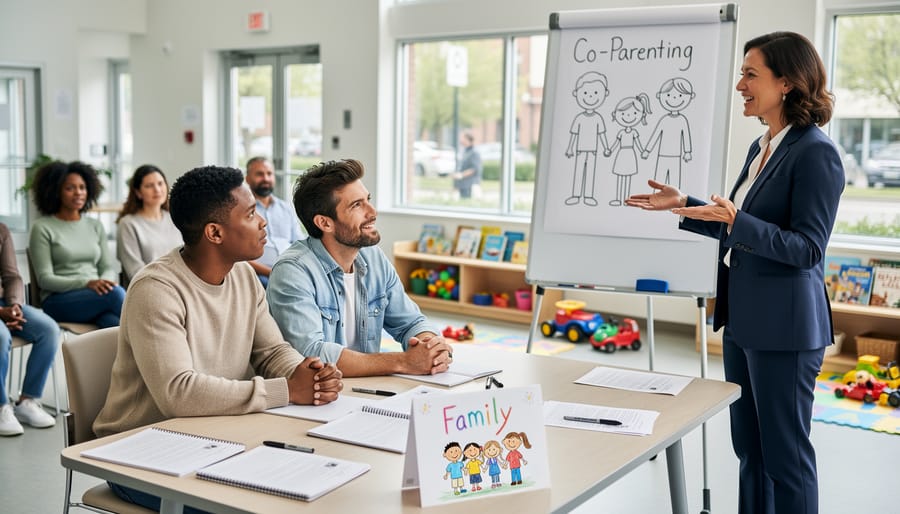
Co-parenting classes are structured educational programs that teach separated or divorced parents practical skills for working together in their children’s best interests. Unlike co-parenting therapy which addresses deeper relationship issues and past conflicts, these classes focus on forward-looking strategies: effective communication, conflict management, age-appropriate parenting approaches, and developing sustainable co-parenting routines.
In Ontario, these programs serve a vital role within the family law system. Courts, community family services, private therapists, mediators, and specialized parenting educators all offer co-parenting classes. They’re available through organizations like the Family Services of Ontario network, court-connected programs administered by local family courts, and licensed private practitioners across the province.
- Court-Ordered Programs
- Classes mandated by a judge as part of custody or access proceedings, with completion certificates required as proof of attendance.
- Voluntary Participation
- Parents choosing to attend classes on their own initiative to improve co-parenting skills and demonstrate good faith.
- Parenting Plan
- A detailed written agreement outlining how separated parents will share responsibilities, make decisions, and coordinate their children’s care.
- Parallel Parenting
- A lower-communication approach where high-conflict parents disengage from each other while maintaining separate, consistent parenting standards.
- Cooperative Co-Parenting
- A collaborative style where parents communicate regularly, coordinate rules and schedules, and present a united front for their children.
The format varies to accommodate different needs and circumstances. Group sessions bring together multiple parents for shared learning and peer support, typically meeting weekly for four to eight weeks. Individual sessions offer personalized coaching for unique situations or high-conflict dynamics. In-person classes provide face-to-face interaction and real-time role-playing exercises, while online options deliver flexibility for parents balancing work, childcare, and geographic distance.
Some parents attend because a judge has required it as a condition of custody or access orders. Others enroll voluntarily, recognizing that structured guidance can prevent costly conflicts and protect their children from ongoing parental tension. Whether mandated or chosen, completion of a recognized co-parenting program demonstrates to the court that a parent is committed to putting their children’s needs first and willing to develop healthier co-parenting practices.
How Co-Parenting Classes Work in Ontario
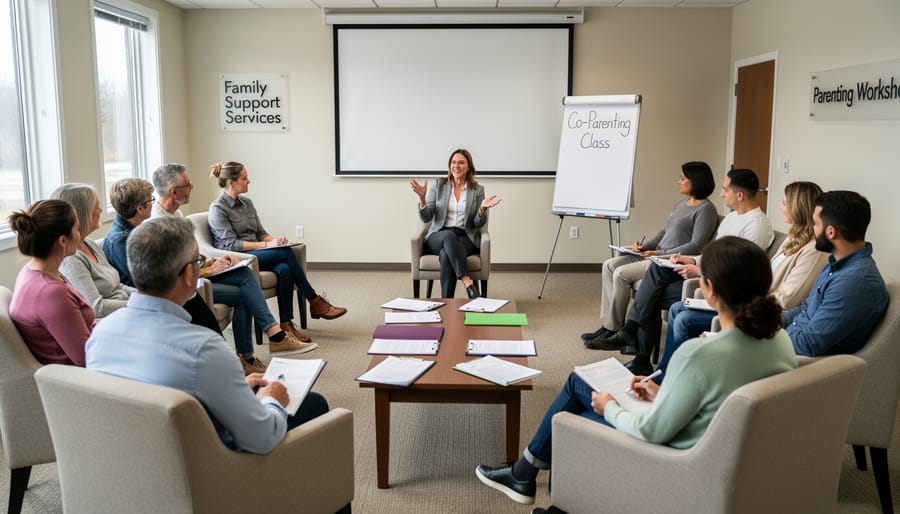
Enrolling in a co-parenting class in Ontario is straightforward, though the process varies slightly depending on whether you’re attending voluntarily or by court order. If a judge mandates the program during custody proceedings, you’ll receive specific instructions about which provider to contact and by when you must complete it. For voluntary participation, you can register directly with family service agencies, community centres, or private facilitators, many accept phone or online registration and offer flexible start dates throughout the year.
Most programs run between four and eight hours of instruction total. You might attend a single full-day workshop on a Saturday, two evening sessions spread over consecutive weeks, or complete modules at your own pace through an online platform. Group classes typically include six to twelve parents, creating a supportive environment where you’ll hear different perspectives while maintaining confidentiality. Some programs offer individual or couples-focused sessions if your situation requires more privacy or specialized attention.
The sessions themselves are structured but conversational. A trained facilitator, often a social worker, psychologist, or family law professional, guides the discussion using evidence-based materials. You’ll work through scenarios, watch brief videos, complete worksheets, and participate in respectful group discussions. The atmosphere isn’t judgmental; facilitators understand you’re navigating a difficult transition and create a space where questions are welcomed and emotions are acknowledged.
The curriculum addresses practical skills you’ll use immediately. Common topics include:
- Communication techniques for respectful, child-focused conversations with your co-parent
- Managing conflict and de-escalating tense situations
- Creating realistic parenting schedules that serve your children’s needs
- Understanding children’s emotional needs during separation and divorce
- Co-parenting boundaries and maintaining consistency across two households
- Introducing new partners in age-appropriate, healthy ways
You’ll also explore how children experience divorce at different developmental stages, learn to recognize signs of stress in your kids, and develop strategies for shielding them from adult conflicts. Many programs help you draft or refine a co-parenting plan that outlines decision-making responsibilities, communication methods, and conflict resolution approaches.
Upon completion, you’ll receive a certificate documenting your attendance and participation. If the court ordered your attendance, the provider typically files this certificate directly with the court or gives you a sealed copy to submit through your lawyer. This proof demonstrates your commitment to your children’s well-being and compliance with court directives. Even in voluntary cases, keeping your certificate can be valuable if custody matters arise later, it shows proactive effort to be an effective co-parent.
Types of Co-Parenting Programs Available
Ontario parents have access to several distinct types of co-parenting programs, each designed to meet different needs and circumstances. Understanding these options helps you select the approach that works best for your family situation.
Court-mandated programs represent one major category. When a judge orders co-parenting education under the Children’s Law Reform Act or as part of custody proceedings, you’ll typically attend a structured program approved by the court. These follow a standardized curriculum covering communication skills, conflict management, and child-focused decision-making. The provider issues a completion certificate that gets filed with your case. Most court-ordered programs run four to eight sessions.
Voluntary community programs offer similar content without the legal requirement. Family service agencies, community centers, and non-profit organizations across Ontario run these classes for parents who want to improve their co-parenting relationship proactively. They tend to be more flexible in scheduling and may cost less than court-connected options. You’re free to choose a program that fits your schedule and learning style.
Format choices matter significantly. In-person classes create face-to-face interaction with instructors and other parents, which some find valuable for building skills through role-play and real-time feedback. Online programs provide convenience for parents juggling work schedules, childcare responsibilities, or geographic distance. Many reputable providers now offer virtual sessions that mirror the quality of in-person instruction. Some programs blend both approaches.
Group sessions bring together multiple co-parenting pairs or individuals, creating opportunities to learn from others’ experiences. You’ll hear different perspectives and realize you’re not alone in your challenges. Individual coaching provides personalized attention tailored to your specific co-parenting obstacles. This one-on-one format works well when privacy concerns exist or when your situation requires customized strategies.
Specialized programs address particular circumstances. High-conflict co-parenting classes focus intensively on de-escalation techniques and parallel parenting strategies for parents who struggle with ongoing disputes. Programs targeting parents of young children emphasize developmental needs and routine consistency, while those for parents of teenagers address unique challenges like dating, driving, and college planning. Some programs serve parents introducing new partners or managing blended family dynamics.
Choosing the right type depends on whether you’re court-ordered (which limits your options to approved providers), your conflict level with your co-parent, your children’s ages, your schedule flexibility, and your budget. If you’re unsure which program suits your situation, consult with your family lawyer. They can recommend options that align with your custody case and family needs.
When and Why Co-Parenting Classes Are Used

Co-parenting classes serve several purposes in Ontario’s family law landscape, each designed to support healthier post-separation family dynamics. Understanding when and why these programs are used can help you determine whether they’re right for your situation.
Court-Ordered Participation
Many parents first encounter co-parenting classes through a court order during custody or access proceedings. Ontario judges frequently mandate these programs when they observe significant parental conflict, communication breakdowns, or concerns about a child’s adjustment to separation. The court may require one or both parents to complete a program before finalizing custody arrangements or as a condition of a parenting order. This isn’t punitive. It’s a proactive step courts take to equip parents with skills that protect children from ongoing conflict.
Voluntary Enrollment
You don’t need a court order to benefit from co-parenting education. Many separated parents voluntarily enroll to strengthen their co-parenting relationship and avoid future disputes. If you’re struggling with communication, finding it difficult to coordinate schedules, or simply want to ensure your children thrive despite the family transition, voluntary participation demonstrates commitment to your children’s wellbeing. Family lawyers and mediators often recommend these classes during settlement negotiations as a constructive way to build a foundation for successful co-parenting.
Integration with Parenting Plans
Co-parenting classes frequently complement formal parenting plans, providing the skills needed to implement those agreements effectively. The communication techniques and conflict resolution strategies you learn can make the difference between a plan that works smoothly and one that generates constant friction.
The Real-World Benefits
Research consistently shows that children of separated parents who communicate effectively and minimize conflict adjust better emotionally and academically. By learning evidence-based co-parenting tips and strategies, you’re investing in outcomes that matter: your child’s stability, self-esteem, and sense of security. These classes also reduce the likelihood of returning to court for enforcement or modification applications, saving time, money, and emotional energy for your entire family.
Who Should Attend Co-Parenting Classes

Co-parenting classes benefit a wide range of parents navigating separation and family restructuring in Ontario. If you’re currently going through a divorce or separation, these programs offer foundational skills at exactly the moment you need them most, helping you establish healthy communication patterns and child-focused routines from the start. Parents with existing custody orders also find value in classes, especially when life changes or recurring conflicts suggest room for improvement in your co-parenting approach.
High-conflict situations particularly benefit from structured education. If you and your former partner struggle with persistent disagreements, heated exchanges, or difficulty making joint decisions, co-parenting classes provide neutral ground and evidence-based strategies to reduce tension. Parents introducing new partners into their children’s lives often attend to navigate these transitions thoughtfully, ensuring everyone’s needs are considered.
You might also attend simply because you want to do right by your children. Proactively seeking support, even when things are relatively calm, demonstrates commitment to their wellbeing. The same applies if extended family is involved; understanding co-parenting principles can help when addressing matters like grandparents access within your broader family dynamic.
Common concerns about attending are understandable but manageable. Embarrassment fades quickly in a room of parents facing similar challenges; most participants report feeling relieved rather than judged. Time commitment is typically reasonable, many programs run four to eight hours total, often spread across evenings or weekends. Costs vary, with court-connected programs sometimes offered at reduced rates or on a sliding scale.
Seeking help isn’t weakness. It’s one of the strongest choices you can make for your children during a difficult transition.
Finding Co-Parenting Classes in Ontario
Finding co-parenting classes in Ontario is straightforward once you know where to look. Whether you’re court-ordered to attend or seeking support voluntarily, several avenues offer access to quality programs that fit your schedule and situation.
Provincial and municipal family services represent a reliable starting point. Many Ontario municipalities offer subsidized or free co-parenting programs through family resource centres and children’s aid societies. These community-based options often provide group sessions facilitated by social workers or family counsellors, creating peer support alongside education. Courts frequently maintain lists of approved providers, especially when classes are mandated as part of custody proceedings.
Private therapists, family mediators, and specialized counselling centres offer another path, particularly for parents seeking more personalized attention or scheduling flexibility. These professionals often provide individual or small-group sessions tailored to high-conflict situations or specific family dynamics. While typically more expensive than community programs, private providers may offer evening and weekend availability that works better for busy schedules.
Online platforms have expanded access considerably, allowing parents to complete courses from home on their own timeline. Many accredited organizations now offer virtual programs recognized by Ontario courts, which can be especially helpful if you file for divorce online and prefer managing legal processes digitally. Just verify that any online program meets court requirements if you’ve been mandated to attend.
Your family lawyer remains one of your best resources for finding appropriate programs. Legal professionals working in family law maintain current knowledge of which providers courts accept and can recommend programs suited to your specific circumstances and co-parenting challenges.
When evaluating any program, look for these quality markers:
- Facilitators with recognized credentials in family therapy, social work, or mediation
- Evidence-based curriculum covering communication, conflict resolution, and child development
- Format options that accommodate your schedule and learning preferences
- Official completion certificates provided upon finishing the program
- Court recognition if mandated attendance is required
- Clear information about costs, payment plans, and any available subsidies
Before enrolling, confirm that the program meets any court requirements specified in your case. Ask providers directly about their accreditation and whether they regularly issue certificates accepted by Ontario family courts. This verification step prevents wasted time and ensures your effort fulfills legal obligations while genuinely supporting your co-parenting journey.
Common Questions About Co-Parenting Classes
Do both parents need to attend co-parenting classes?
It depends on the circumstances. When classes are court-ordered, the judge typically requires both parents to attend and complete the program independently. For voluntary programs, either parent can attend on their own, you’ll still gain valuable skills and strategies even if your co-parent doesn’t participate.
What if my ex-partner refuses to attend?
If attendance is court-mandated and your ex refuses, they may face consequences such as delayed proceedings or unfavorable custody considerations. Document their refusal and inform your lawyer, as non-compliance can strengthen your position. If it’s voluntary, focus on what you can control, your own learning and growth as a co-parent.
How much do co-parenting classes cost in Ontario?
Court-connected programs often range from free to around $50-100 per person. Community-based programs through family services may charge on a sliding scale based on income. Private programs and individual coaching can cost several hundred dollars but may offer more flexibility and personalized attention.
Are the classes confidential?
Yes, with important limits. What you discuss in class remains confidential among participants and facilitators, but the fact that you attended (and whether you completed the program) will be reported to the court if it was mandated. Facilitators won’t share details of your participation or personal disclosures with the judge.
Can I complete co-parenting classes online?
Many Ontario programs now offer online options, which became more common during the pandemic and have remained available. Courts generally accept online completion as equivalent to in-person attendance, but confirm this with your lawyer or the program provider if your participation is court-ordered.
How long do co-parenting classes take to complete?
Most programs require four to six hours of instruction total, often delivered as a single session, two half-day sessions, or weekly classes over several weeks. Online self-paced programs offer more flexibility but still require the same total time commitment.
Are co-parenting classes actually effective?
Research shows that parents who complete these programs report better communication with their co-parent, reduced conflict, and improved understanding of their children’s needs during transitions. The real-world impact depends on your willingness to apply what you learn, but the tools and frameworks taught have helped countless Ontario families navigate co-parenting more successfully.
Beyond these common questions, parents sometimes worry that attending classes signals weakness or admitting fault in the separation. The opposite is true. Choosing to learn evidence-based co-parenting strategies demonstrates your commitment to your children’s well-being and your willingness to prioritize their needs over ongoing conflict. Courts view participation favorably, whether mandated or voluntary, because it shows good faith and a focus on what matters most.
If cost is a barrier, ask about sliding-scale fees or payment plans when you contact program providers. Many organizations want to make these classes accessible and will work with you. Your family lawyer can also recommend affordable options in your area and may know of subsidized programs through local family services.
Co-parenting classes offer separated and divorcing parents in Ontario a structured, compassionate pathway to put their children’s needs first. Whether you’re facing a court mandate or choosing to participate voluntarily, these programs provide the skills and strategies you need to communicate effectively, reduce conflict, and create a stable environment for your children during a challenging transition.
The tools you gain, conflict resolution techniques, effective communication skills, and a deeper understanding of your children’s emotional needs, extend far beyond the classroom. They become part of your everyday parenting approach, helping you navigate decisions, handle disagreements constructively, and demonstrate to the court that you’re committed to cooperative parenting. Many parents find that investing time in these classes ultimately saves emotional energy and legal costs down the road.
If you’re navigating custody arrangements or struggling with co-parenting challenges, you don’t have to figure it out alone. Professional guidance can make a meaningful difference in both your family’s wellbeing and the outcome of your legal proceedings. Our clients often tell us that having experienced support helped them feel more confident and prepared during one of life’s most difficult moments.
We invite you to book a free consultation to discuss your unique situation. Whether you’re exploring co-parenting programs, developing a custody arrangement, or need guidance on family law matters, our team is here to provide compassionate, knowledgeable support tailored to your family’s needs. Together, we can help you build a path forward that prioritizes your children’s happiness and your peace of mind.