
Can Grandparents Get Legal Access to Grandchildren in Ontario?
In Ontario, grandparents do have legal standing to seek court-ordered contact or custody of their grandchildren, but there is no automatic right to access. Under the Children’s Law Reform Act, as amended by Bill 34 in 2016, grandparents are explicitly recognized and may apply to court for a contact order. The court will then assess whether granting access serves the child’s best interests, considering the unique relationship between grandparent and grandchild alongside other statutory factors.
This legal pathway exists precisely because family circumstances can fracture. When parents separate, remarry, or face crisis, grandparents are sometimes shut out entirely. Other times, a parent’s death or incapacity leaves grandparents seeking a formal role in a child’s life. The law acknowledges that grandparents can be vital sources of stability, continuity, and love, but it balances that recognition against parental autonomy and the primacy of the child’s welfare.
Bill 34 was a watershed moment. Before its passage, grandparents had to argue their way into court as “any other person.” Now, the statute names them directly, affirming their standing and requiring judges to weigh the grandparent-grandchild bond as part of every custody or access decision. This doesn’t guarantee success, but it does mean you are not starting from a place of legal invisibility.
If you’ve been denied time with your grandchildren, you’re likely feeling a profound mix of grief, frustration, and helplessness. Those emotions are valid. The courts understand that these disputes are deeply personal, and the process is designed to prioritize the child’s emotional and developmental needs above all else. A compassionate family lawyer can help you present your case with clarity and strength. We offer free consultations to discuss your unique situation and the realistic prospects of obtaining a contact order.
Understanding Grandparents’ Legal Rights in Ontario
No Automatic Right to Contact
In Ontario, grandparents do not have an automatic legal right to see or spend time with their grandchildren. This can come as a difficult reality for many grandparents who have played a meaningful role in a child’s life but suddenly find themselves cut off from contact. The law presumes that parents, not grandparents or other relatives, have the primary authority to make decisions about their children’s lives, including who may have access to them.
This principle exists to protect parental autonomy and recognize that parents are generally best positioned to determine what serves their child’s welfare. Courts respect the fundamental right of parents to raise their children as they see fit, free from interference by extended family members or the state, absent compelling reasons. Even when grandparents strongly disagree with a parent’s decision to limit or deny contact, that disagreement alone does not override parental authority.
However, the absence of an automatic right does not mean grandparents are without legal recourse. Ontario law explicitly allows grandparents may seek orders for custody or access through the court system, provided they can demonstrate that such contact would serve the child’s best interests, a higher bar than simply wishing to maintain a relationship.
How Bill 34 Changed the Landscape
Before 2016, grandparents in Ontario could apply for custody or access under the Children’s Law Reform Act, but the legislation did not mention them by name. That silence created uncertainty. Some grandparents worried they lacked standing, and the absence of explicit recognition meant judges had broad discretion without statutory acknowledgment of the grandparent-grandchild bond. The legal pathway existed, but it felt precarious.
Bill 34 added grandparents directly into the statute in 2016, removing that ambiguity. The Children’s Law Reform Amendment Act (Recognizing Relationships with Grandparents) amended subsection 21(1) to include the words “including a grandparent” after “any other person,” confirming that grandparents are explicitly entitled to apply for custody or access. It also amended subclause 24(2)(a)(i) by adding “including a parent or grandparent” after “each person,” which means courts must now consider the relationship between the child and each grandparent when deciding these applications.
This wasn’t a radical change in what grandparents could do, they could always apply, but it was a meaningful shift in how the law recognized them. By naming grandparents in the statute, Bill 34 signaled that the bond between grandchildren and grandparents matters in law, not just in life. Courts must weigh that relationship as part of the best interests analysis, giving grandparents clearer statutory standing and legitimacy when they step forward to seek contact or custody.
The Best Interests Test

At the heart of every grandparent custody or access case sits a single, non-negotiable standard: the child’s best interests. Ontario courts don’t weigh parental rights against grandparent rights as competing claims. Instead, they ask one question, what arrangement serves this particular child best?, and every other consideration flows from that answer.
The Children’s Law Reform Act makes this paramount principle explicit. When deciding whether to grant a grandparent access or custody, judges must evaluate all relevant circumstances through the lens of what benefits the child emotionally, physically, and developmentally. Bill 34’s amendments reinforced this framework by requiring courts to specifically consider “the relationship between the child and each person, including a parent or grandparent” who has a claim to the child’s time. That statutory language doesn’t guarantee grandparents will win their applications, but it does ensure judges must meaningfully assess the existing bond between grandchild and grandparent as part of the best interests analysis.
This standard protects children from being treated as possessions in adult disputes. It also means that even a loving, longstanding grandparent relationship won’t automatically override parental objections, courts must be convinced that continued contact truly serves the child, not simply the adults seeking it.
When Grandparents Can Apply for Access or Custody

Grandparents in Ontario can apply for access or custody whenever they believe it’s in their grandchild’s best interests, regardless of whether the parents are married, separated, divorced, or living together. The law doesn’t restrict applications to specific family structures. You might seek legal intervention in several common scenarios.
Parental separation or divorce often triggers grandparent access disputes. When parents split, one may move away or restrict contact with the other side of the family. If your child remarries and their new partner discourages your relationship with your grandchildren, you may find yourself suddenly excluded from lives you’ve been central to for years.
Parental estrangement represents another frequent catalyst. Adult children sometimes cut off contact with their own parents, taking the grandchildren with them. These family rifts, whether rooted in conflict, disagreement, or misunderstanding, can leave you with no way to maintain bonds you’ve nurtured since your grandchildren were born.
Parental incapacity creates urgent situations where grandparents step forward. If your child struggles with addiction, mental health crises, incarceration, or serious illness, you may need to seek custody to provide stability. Courts recognize that grandparents often serve as the most appropriate caregivers when parents cannot fulfill their responsibilities.
Simple denial of contact, even without obvious crisis, gives you standing to apply. Perhaps your daughter-in-law decided you’re a bad influence. Maybe your son’s partner feels threatened by your close relationship with the children. Parents can refuse grandparent contact for almost any reason, but that doesn’t mean courts will agree their decision serves the children.
Death of your adult child also prompts many applications. When the surviving parent restricts or severs your relationship with grandchildren you’ve helped raise, legal action may be your only recourse to preserve that bond.
The key point: you don’t need your child’s permission or cooperation to file. Any grandparent may bring an application to court. Whether you’ll succeed depends on proving the relationship benefits your grandchildren, not on the parents’ marital status or your relationship with them.
How to Apply for a Contact or Custody Order
Pursuing legal access or custody of your grandchildren is a significant step requiring careful preparation and professional guidance. The court process can feel daunting, especially when family relationships are strained, but understanding the path forward can provide clarity during an emotionally difficult time.
The journey begins with securing experienced legal counsel. A family lawyer who understands grandparent rights in Ontario will assess your situation, explain your realistic prospects, and help you navigate the complexities of the Children’s Law Reform Act. This initial consultation is crucial, an attorney can evaluate whether your case has sufficient merit to proceed and what evidence you’ll need to present. Many grandparents underestimate the legal and emotional stakes involved; having representation from the outset protects your interests and ensures procedural requirements are met.
Once you’ve retained counsel, the process typically follows these steps:
- Consult a family lawyer experienced in grandparent rights to assess your case and determine whether applying for access or custody is appropriate given your specific circumstances.
- Gather evidence documenting your existing relationship with your grandchild, photographs, cards, witness statements, and any records showing regular contact, alongside evidence that continued contact serves the child’s best interests.
- File an application under the Children’s Law Reform Act in the Ontario Superior Court of Justice, formally requesting a contact or custody order. While some legal matters allow parties to file online grandparent access applications typically require traditional court filings due to their complexity.
- Serve the application on all parties with legal standing, including the child’s parents and any other guardians, providing them formal notice of your court action and the relief you’re seeking.
- Attend court hearings where you and your lawyer will present your case, including witness testimony and documentary evidence, while the parents present their position.
- Obtain a court order if the judge grants your application, which will specify the terms of access (frequency, duration, conditions) or custody arrangements.
The timeline varies considerably depending on court schedules, case complexity, and whether parents contest the application. Contested cases, where parents actively oppose grandparent contact, take longer and require more extensive evidence. Situations involving legal separation or divorce between parents may complicate proceedings if custody arrangements are already being litigated.
Throughout this process, meticulous documentation matters. Courts want concrete evidence of a meaningful, beneficial relationship, not abstract claims. Bring calendars showing regular visits, school or medical records if you’ve been involved in caregiving, and testimony from witnesses who’ve observed your bond with your grandchild. Your lawyer will help you organize this material into a compelling narrative that centers the child’s wellbeing.
Legal representation isn’t merely advisable, it’s practically essential. Family court procedure involves strict rules around evidence, filing deadlines, and courtroom conduct. A misstep can weaken your case or result in dismissal on technical grounds. More importantly, these cases carry profound emotional weight; having an advocate who can present your position objectively while you focus on the human elements provides invaluable support during an inherently painful process.
What Courts Consider in Grandparent Access Cases
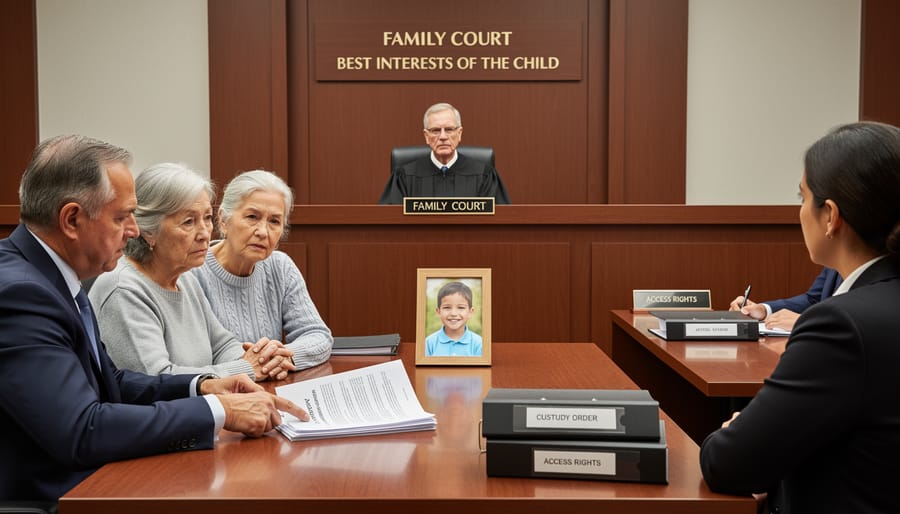
When a grandparent applies for access or custody in Ontario, the court conducts a thorough assessment guided by one overriding principle: the child’s best interests. Everything else, parental wishes, family conflict, even the grandparent’s own feelings, takes a back seat to what will genuinely benefit the child. Understanding what judges actually look for can help you build a stronger case and set realistic expectations if you hire the right lawyer to pursue this path.
The Children’s Law Reform Act requires courts to consider the relationship between the child and each parent and grandparent. This statutory requirement, strengthened by Bill 34’s amendments, means judges must explicitly examine the nature and quality of your bond with your grandchild. They will assess how long you’ve been involved in the child’s life, the frequency and consistency of past contact, and the emotional significance of the relationship. A grandparent who provided daily care during the child’s first years carries more weight than one who saw the child occasionally at holidays, though neither situation automatically guarantees or disqualifies access.
Judges also weigh the child’s emotional and physical needs, including stability and continuity. If you’ve been a consistent, nurturing presence, the court may find that maintaining that relationship serves the child’s well-being. Conversely, if contact has been sporadic or the child shows distress at the prospect of visits, that becomes a significant factor. The child’s views matter too, particularly for older children who can express preferences, though the court is not bound by a child’s stated wishes alone.
Parental objections receive serious consideration, but they are not determinative. A parent’s refusal to allow access does not end the inquiry. The court examines why the parent objects and whether those reasons relate to the child’s welfare or stem from adult conflict. If a parent opposes contact solely due to personal animosity rather than legitimate child-protection concerns, the court may grant access despite the objection.
Your ability to support the child’s relationship with their parents also matters. Courts look unfavorably on grandparents who undermine parental authority, speak negatively about a parent in the child’s presence, or seek to replace rather than complement the parental role. Demonstrating respect for the parents’ primary position, even when you disagree with their decisions, strengthens your case considerably.
Quality legal representation helps you present evidence of these factors effectively, whether through affidavit testimony, documentation of your involvement, or witness statements from people who’ve observed your relationship with your grandchild. The court decides based on evidence, not assumptions, so building a clear factual record is essential.
Challenges Grandparents May Face
Pursuing legal access to your grandchildren presents significant challenges that extend far beyond the courtroom. The emotional burden of initiating legal proceedings against your own child cannot be overstated. Many grandparents describe the decision as heartbreaking, torn between their deep desire to maintain a relationship with their grandchildren and the reality that legal action may further strain or permanently damage their relationship with their adult children. This emotional conflict often causes grandparents to delay seeking help, hoping the situation will resolve on its own.
Financial considerations also weigh heavily. Family law proceedings can be costly, involving legal fees, court filing costs, and potentially the expense of expert assessments or reports if the court requires them. For grandparents on fixed incomes or limited retirement savings, these costs represent a real barrier to accessing justice.
The legal burden itself is substantial. Unlike parents, grandparents carry the responsibility of proving that contact serves the child’s best interests even when a parent objects. Courts generally defer to parental decision-making authority, meaning grandparents must build a compelling case demonstrating why judicial intervention is warranted. This requires gathering evidence, potentially obtaining witness statements, and being prepared for intensive scrutiny of your relationship with the grandchild and your motivations for seeking access.
Family conflict often intensifies once legal proceedings begin. Extended family members may take sides, creating divisions that last for years. Siblings, other grandparents, and even the children themselves may be drawn into the dispute, compounding the stress and isolation many grandparents already feel.
Despite these very real obstacles, thousands of grandparents in Ontario navigate this difficult path each year because maintaining their relationship with their grandchildren matters profoundly. The law recognizes these relationships as valuable, and legal rights exist precisely because the legislature understands that grandparents play an irreplaceable role in many children’s lives.
Frequently Asked Questions About Grandparent Rights
Grandparents navigating the complexities of seeking legal access to their grandchildren often share similar concerns and questions. Understanding the answers can help you make informed decisions about your family’s future and clarify what to expect from Ontario’s legal system.
Can grandparents get custody of grandchildren in Ontario?
Yes, grandparents may apply for custody if it serves the child’s best interests and the parents are unable or unfit to provide care. Courts assess whether custody by a grandparent would better protect and nurture the child than the current arrangement.
Do I need a lawyer to apply for access or custody?
While you are not legally required to hire a lawyer, legal representation is strongly recommended given the complexity of family law proceedings and the emotional stakes involved. An experienced family law attorney can navigate the procedural requirements, present your case effectively, and advocate for your grandchild’s best interests.
Can parents legally prevent me from seeing my grandchildren?
Yes, unless a court order is in place granting you access, parents have the legal authority to control contact with their children, including preventing grandparent visits. This is why seeking a formal access order becomes necessary when family communication breaks down.
Does it matter if I’ve been a primary caregiver to my grandchild?
Absolutely. Courts give significant weight to established relationships and caregiving history when determining access or custody applications. If you have been actively involved in your grandchild’s daily care, this strengthens your position considerably and demonstrates the importance of maintaining that bond.
Beyond these common questions, grandparents often worry about how long the legal process takes. The timeline varies significantly depending on whether parents contest the application, the court’s schedule, and the complexity of your family situation. Some cases resolve through negotiation within months, while contested matters may take a year or longer to reach a final hearing.
Another frequent concern involves situations where the grandchild wants to maintain contact but the parents refuse. While the court will consider a child’s wishes, particularly as the child matures, these preferences are not determinative. Judges balance the child’s expressed desires against their best interests, the reasons for parental objection, and the overall family dynamics. A young child’s wishes carry less weight than those of a teenager who can articulate reasoned preferences.
The emotional difficulty of pursuing legal action against your own children cannot be understated, yet many grandparents find reassurance in knowing their legal standing is supported by statute. Bill 34’s amendments to the Children’s Law Reform Act explicitly recognize grandparents’ right to apply for custody or access, and require courts to consider the grandparent-grandchild relationship when making decisions. This legislative recognition validates what grandparents instinctively know: their relationship with grandchildren matters and deserves legal protection when circumstances warrant intervention.
While grandparents in Ontario don’t have automatic rights to see their grandchildren, the law recognizes the profound importance of these relationships. Bill 34, which strengthened the Children’s Law Reform Act in 2016, now explicitly acknowledges grandparents’ standing to apply for custody or access, and requires courts to consider the grandparent-grandchild relationship when determining what serves a child’s best interests.
Seeking legal intervention when you’re separated from a grandchild you love is not an act of conflict. It’s an act of love. You’re advocating for a relationship that research and lived experience tell us can be vital to a child’s development, stability, and sense of identity. The process demands courage, patience, and the right legal guidance to navigate successfully.
At Divorce the Smart Way, we’ve helped many grandparents understand their options and build persuasive applications that centre on what matters most: the child’s wellbeing. Our clients tell us that having compassionate, knowledgeable support made all the difference during an emotionally difficult time. Their testimonials reflect successful outcomes in complex family law matters where maintaining important relationships was at stake.
If you’re being denied contact with your grandchildren, you don’t have to navigate this alone. We offer a free consultation where you can discuss your situation confidentially, understand your legal rights, and explore whether pursuing a court application is the right path forward. Contact us today to take the first step toward reconnecting with the grandchildren who matter so much to you.