
Legal Separation in Ontario: What It Really Means for Your Divorce
Ontario does not have a formal legal separation process. Unlike other jurisdictions, there’s no court order, government certificate, or official document that declares you “legally separated” in this province. Separation begins the moment you and your spouse decide to live separate and apart, either under the same roof or in different homes, with the intention of ending your relationship. That simple fact, however, doesn’t mean separation is straightforward or that your rights are automatically protected.
Many people searching for information about legal separation in Ontario are facing one of life’s most stressful transitions. You may be wondering whether you need to file paperwork, how separation differs from divorce, or what happens to your home, children, and finances during this period. The confusion is understandable. While Ontario law doesn’t require formal separation proceedings, the decisions you make during this time can profoundly affect your future, particularly when it comes to property division, spousal support, child custody, and eventually divorce itself.
Here’s what you need to understand right now: separation in Ontario carries significant legal implications even without court involvement. The date you separate matters. The agreements you reach, or fail to reach, matter. Whether you seek Ontario divorce help early in the process can determine whether you protect your interests or face costly disputes later.
This article will clarify exactly what separation means under Ontario law, explain the critical difference between separation and divorce, outline your rights and responsibilities during this period, and show you why experienced legal guidance can make the difference between a fair outcome and lasting regret. You don’t need to navigate this alone.
Understanding Legal Separation in Ontario
If you’re navigating a difficult marriage breakdown in Ontario, you might assume that “legal separation” involves filing paperwork with the courts or obtaining some official status. That’s a reasonable expectation, but it’s not how Ontario works. Unlike some U.S. states or other jurisdictions where legal separation is a formal court process, Ontario has no such legal designation. Understanding this distinction matters because it shapes what steps you take, what rights you have, and how you prepare for eventual divorce.
In Ontario, separation is straightforward in concept: it happens the moment you and your spouse begin living separate and apart with at least one of you intending to end the marriage. There’s no application to file, no judge to approve it, and no certificate to obtain. The separation simply exists as a fact. You can be separated while still living under the same roof, provided you’ve ended your marital relationship, sleeping in separate rooms, no longer sharing meals, stopping intimate relations, and presenting yourselves as separated rather than as a couple. This arrangement is common when financial or childcare circumstances make moving out immediately impractical.
What matters most is the date. The day you or your spouse decides the marriage is over and acts on that decision becomes your official separation date. This date is crucial because Ontario requires spouses to live separate and apart for at least one full year before a court will grant a divorce (unless you’re relying on adultery or cruelty as grounds). That year doesn’t reset if you briefly reconcile, you get one reconciliation period of up to 90 days without restarting the clock. But if you reunite for longer, the one-year countdown begins again from the new separation date.
It helps to know what legal separation means in the Canadian context: it’s not a legal status you acquire, but a factual state you document. Keep records, emails, text messages, signed notes, that confirm when the separation began. If disputes arise later about property division or support, that date determines which assets get divided and when financial obligations start or stop.
While there’s no formal separation process, your rights and responsibilities don’t disappear the moment you separate. Child custody, support obligations, and property entitlements all remain active issues that need resolution, whether through negotiation, a separation agreement, or court orders. The absence of a legal separation filing doesn’t mean you’re in limbo, it means you’re responsible for managing these issues proactively, ideally with experienced legal guidance to protect your interests during what often becomes a year-long transition toward divorce.

Separation vs. Divorce: Key Legal Differences
While many people use the terms interchangeably, separation and divorce represent fundamentally different legal statuses in Ontario, each with distinct implications for your rights and future. Understanding these differences helps you make informed decisions about which path suits your circumstances.
Separation occurs the moment you and your spouse decide to live apart with the intention of ending your marriage. There’s no court filing required, no judge’s approval needed. You’re separated simply because you’ve decided to be. Divorce, by contrast, is a formal legal process that ends your marriage entirely through a court order. It’s the final step that changes your legal status from married to single.
| Legal Status | Definition | Requirements | Rights & Restrictions | When to Choose |
|---|---|---|---|---|
| Separation | Living apart with intent to end marriage | No formal process; can occur under same roof with separate lives | Cannot remarry; remain legal next-of-kin; property rights frozen at separation date | Need time to decide; religious or personal reasons; working through arrangements |
| Divorce | Legal termination of marriage | One year separation (or proof of adultery/cruelty); court application and order | Can remarry; no longer legal next-of-kin; property division finalized | Ready to move on completely; need to remarry; want final legal closure |
The most significant practical difference? Only divorce allows you to remarry. While separated, you remain legally married. This means your spouse is still your legal next-of-kin for medical decisions and inheritance purposes unless you’ve made specific arrangements otherwise. Many people don’t realize that without a proper will, your separated spouse could still inherit your estate.
Property considerations differ dramatically between the two statuses. The moment you separate, that date becomes critical for property division purposes. The value of your assets and debts on your separation date determines what gets divided later, not the values at divorce. This distinction protects both parties from the other’s financial decisions during the separation period.
A common misconception holds that separation agreements aren’t legally binding. They absolutely are, when properly drafted. Another myth suggests you must divorce after separation. You don’t. Some couples remain separated indefinitely for religious reasons, financial benefits, or simply because divorce isn’t a priority. The law doesn’t force you to divorce.
Your legal obligations continue during separation. You’re still responsible for child support, possibly spousal support, and you cannot dispose of matrimonial property without consequences. Separation doesn’t give you a free pass to drain joint accounts or sell the family home.

Why the Separation Period Matters
Ontario law requires couples to live “separate and apart” for at least one year before a divorce can be granted, unless the divorce is based on adultery or cruelty. This waiting period isn’t arbitrary. It gives couples time to work through immediate emotions, make practical arrangements for children and finances, and determine whether reconciliation might be possible. The separation date becomes the legal trigger for property division calculations and establishes the timeline for your eventual divorce application.
What actually counts as separation? Many people assume it requires physically moving to different homes, but Ontario law recognizes that separation can occur while living under the same roof. The defining factor is whether the couple has clearly withdrawn from the marital relationship. Courts look at whether you’ve stopped presenting yourselves as a couple, ceased intimate relations, divided household responsibilities, separated finances, and made your intention to separate clear to each other.
Living in the same house during separation presents evidentiary challenges, though. You’ll need strong documentation showing you’ve genuinely separated your lives. Keep separate bedrooms, maintain distinct routines, communicate only about practical matters like children or bills, and inform friends and family about your separated status. Financial separation matters too. Open individual bank accounts, file taxes separately where possible, and track your expenses independently.
The separation date itself carries enormous legal weight. This single date determines when property valuation occurs for division purposes and starts the clock on your one-year waiting period. Document it clearly. Send a written notice to your spouse confirming the separation date, even if you’ve discussed it verbally. Keep records of when you established separate residences or began living separately under the same roof. Moving out without proper documentation or written confirmation creates unnecessary disputes later.
Brief reconciliation attempts don’t automatically restart the clock. Ontario law allows couples to resume cohabitation for up to 90 days total during the separation year to attempt reconciliation. If the reconciliation fails, those days don’t count against your separation period. Beyond 90 days, however, the one-year timeline resets completely.
Getting the separation date wrong, leaving it ambiguous, or failing to document it properly causes complications when you’re ready to proceed with divorce. These details matter when courts evaluate your application.
Legal Rights and Obligations During Separation
Child Custody and Support
When you separate in Ontario, your parental rights and responsibilities remain unchanged. Both parents continue to have legal obligations to their children, regardless of where anyone lives or the status of the relationship.
Child custody, now called “decision-making responsibility” under Ontario’s federal Divorce Act, determines who makes major decisions about your children’s education, health care, and religious upbringing. Parenting time arrangements specify where children spend their time. These arrangements can be negotiated between parents or determined by a court if you can’t agree.
Child support obligations begin immediately upon separation. The paying parent must provide financial support according to the Federal Child Support Guidelines, which calculate amounts based on income and the number of children. This isn’t optional, and you cannot waive your child’s right to support through private agreement.
You should formalize custody and support arrangements through a written separation agreement or court order. Informal arrangements create uncertainty and complications if circumstances change or disputes arise. Proper documentation protects both parents and, most importantly, ensures your children’s needs remain prioritized.
Courts always make decisions based on the child’s best interests, considering factors like the child’s relationship with each parent, each parent’s ability to provide care, and the child’s own views depending on their age.
Spousal Support Considerations
Spousal support can become payable as soon as you separate, not just after divorce. If one spouse earned significantly more than the other or if one spouse sacrificed career opportunities during the marriage, support may be necessary to address the resulting financial imbalance.
Ontario courts consider several factors when determining spousal support during separation: the length of your marriage, each spouse’s income and earning capacity, the roles you assumed during the marriage, and any economic advantages or disadvantages created by the relationship. The Spousal Support Advisory Guidelines provide a framework, though they’re not mandatory law.
Support can be negotiated between spouses or ordered by a court. Temporary support arrangements established during separation often continue through divorce proceedings and beyond. The amount and duration depend on whether the support is compensatory (repaying a spouse for contributions and sacrifices), non-compensatory (addressing need), or contractual (based on agreements made during the marriage).
Don’t assume support is automatic or that informal arrangements protect your interests. Without proper legal documentation, you may face disputes about what was actually agreed upon. A lawyer can assess your specific situation and ensure any support arrangement is fair and legally enforceable.
Property and Asset Protection
When you separate, the date you begin living apart becomes critically important for property division. Under Ontario’s Family Law Act, this separation date establishes the “valuation date”, the point at which your matrimonial property is valued for equalization purposes. Any assets you acquire or debts you incur after separation typically belong to you alone and won’t be divided.
However, separation doesn’t freeze your property rights or prevent disputes. Your spouse retains legal claims to their share of matrimonial assets accumulated during the marriage, and these claims persist until divorce is finalized or a separation agreement is signed. The matrimonial home receives special protection, neither spouse can sell, mortgage, or remove the other from it without consent or a court order, regardless of whose name appears on the title.
Document your financial situation carefully at separation. Photograph valuables, gather account statements, and obtain property appraisals if needed. Changes in asset values between separation and divorce can become contentious, making accurate records essential for protecting your interests during eventual property division negotiations.
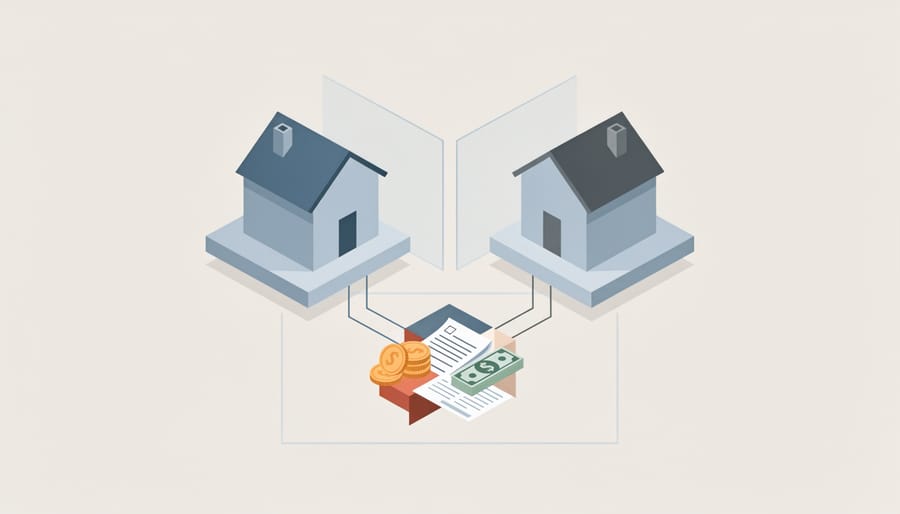
Separation Agreements: Your Blueprint for Moving Forward
A separation agreement is a legally binding contract between you and your spouse that outlines how you’ll handle the practical and financial aspects of your separation. Think of it as your roadmap through an uncertain time, a document that brings clarity and structure when everything else feels chaotic.
These agreements hold significant legal weight in Ontario. When properly drafted and executed, courts generally uphold them unless they’re found to be unconscionable or one party didn’t understand what they were signing. That’s precisely why having a lawyer review or draft your agreement isn’t just recommended, it’s essential protection for your future.
A comprehensive separation agreement should address all major aspects of your separation. This includes arrangements for your children, such as custody, access schedules, and child support obligations. It covers spousal support, if applicable, including amounts and duration. Property division deserves careful attention: which assets each person keeps, how you’ll divide matrimonial property, and who assumes which debts. Don’t overlook practical matters like who stays in the family home during separation, how you’ll handle joint bank accounts, and whether one spouse will continue providing health insurance coverage for the other.
The value of a well-crafted separation agreement extends far beyond the separation period itself. When you eventually proceed with divorce, your separation agreement can be incorporated directly into your divorce order, making the process substantially simpler and faster. You’ve already resolved the difficult issues through negotiation rather than leaving them for a judge to decide. This saves time, reduces legal costs, and gives you control over outcomes that affect your daily life.
Many couples are tempted to create informal agreements or use online templates to save money. This often backfires. Separation agreements must meet specific legal requirements to be enforceable. Vague language, missing provisions, or unfair terms can render sections, or the entire agreement, unenforceable. You might think you’re saving on legal fees now, only to spend far more litigating problems later.
Consider what happens if circumstances change. A properly drafted agreement addresses how modifications will be handled and includes provisions for dispute resolution. It anticipates future scenarios: what if one spouse loses their job? What if a child’s needs change significantly? Professional legal representation ensures these contingencies are addressed upfront.
Your separation agreement represents a fresh start built on a solid legal foundation. It transforms uncertainty into documented clarity, protects your rights, and establishes a framework for your post-separation life. Investing in proper legal guidance during this process isn’t an expense, it’s insurance for your future stability.
When You Need a Lawyer During Separation
Most people start the separation process believing they can handle everything themselves. While some straightforward separations proceed smoothly without immediate legal involvement, certain circumstances make professional representation not just helpful but essential for protecting your rights and your future in divorce.
Complex property division represents one of the clearest signals that you need legal help. When your marital assets include multiple properties, significant investments, retirement accounts, or business interests, the stakes are too high for guesswork. Ontario’s equalization rules require precise valuation of assets on specific dates, and mistakes in this process can cost you tens or hundreds of thousands of dollars. Business owners face particularly intricate challenges, as valuing a business interest and determining what portion constitutes family property requires specialized knowledge.
Contested custody situations demand immediate legal representation. If you and your spouse disagree about parenting arrangements, decision-making responsibility, or access schedules, a lawyer protects your parental rights and ensures your children’s best interests remain the priority. Custody disputes involve complex legal standards about the child’s best interests, and representing yourself puts you at a significant disadvantage against a spouse who has legal counsel.
High-conflict separations, especially those involving domestic abuse, emotional manipulation, or threats, require the protective barrier that legal representation provides. Your lawyer handles communications with your spouse or their counsel, shielding you from direct confrontation while ensuring your safety concerns are documented and addressed through appropriate legal channels.
Even if your separation seems amicable now, consulting a lawyer early prevents costly mistakes. Informal agreements made without legal guidance often unravel later, and words spoken in good faith today can become weapons in future disputes. Early consultation costs far less than fixing problems that develop from well-intentioned but legally flawed arrangements. Financial complexity, parenting disagreements, power imbalances in your relationship, or simply feeling overwhelmed by the process all justify seeking professional guidance sooner rather than later.

How Legal Representation Protects Your Interests
During separation, emotions run high and stakes feel overwhelming. This is precisely when experienced legal representation becomes your strategic advantage. A skilled family law attorney doesn’t just handle paperwork, they become your advocate, translator, and shield against decisions that could haunt you for years.
Your lawyer ensures every agreement you reach during separation holds up legally and serves your long-term interests. They negotiate from a position of knowledge, understanding both Ontario family law and how judges typically rule on contested matters. When your spouse’s lawyer proposes terms that sound reasonable but actually disadvantage you, your attorney catches the trap. They know the difference between a fair settlement and one that merely sounds fair.
Documentation becomes crucial during separation. Your lawyer meticulously records every agreement, every payment, and every custody arrangement. These records form the foundation of your eventual divorce proceedings. Without proper documentation, verbal agreements dissolve into “he said, she said” disputes that courts struggle to resolve. Your attorney ensures you’re building a clear, legally sound record from day one.
Family law attorneys also protect your future by identifying issues you haven’t considered. Perhaps your spouse owns a business with hidden value. Maybe pension division requires specific actuarial calculations. Your lawyer spots these complexities early, before positions harden and opportunities vanish. They understand how separation decisions ripple forward into property division, support calculations, and tax consequences.
Crucially, your lawyer prepares you for the transition to formal divorce proceedings. The separation agreement they help you craft today can streamline your divorce tomorrow, saving thousands in legal fees and months of conflict. They ensure nothing gets overlooked, nothing gets signed prematurely, and your rights remain protected throughout the entire process.
Many clients initially hesitate at legal fees, but the cost of proceeding without representation almost always exceeds the investment in qualified counsel. One overlooked asset, one poorly worded clause, or one missed deadline can cost exponentially more than professional legal guidance from the start.
Common Mistakes to Avoid During Separation
Navigating separation without proper legal guidance can create complications that haunt your divorce proceedings for years. People who try to handle everything themselves often make costly errors that an experienced family lawyer could have prevented.
One of the most damaging mistakes is relying on informal verbal agreements with your spouse. You might shake hands on custody arrangements or financial support, thinking your mutual trust is enough. When circumstances change or disagreements arise months later, you’ll have no enforceable record of what you agreed to. Courts cannot enforce verbal promises, leaving you vulnerable and scrambling to prove what was discussed.
Many separating couples also fail to properly document their separation date and living arrangements. This seemingly minor oversight can delay your divorce by months or even force you to restart the mandatory one-year separation period. Similarly, people often make major financial decisions during separation without understanding the legal implications, selling the matrimonial home, cashing out retirement accounts, or taking on significant debt, that can drastically affect property division later.
Here are critical mistakes that can undermine your position:
- Hiding or dissipating marital assets to keep them from division
- Moving out of the family home without understanding your property rights
- Stopping child or spousal support payments without a court order
- Using children as messengers or bargaining tools in disputes
- Posting about your separation or new relationships on social media
- Signing documents or agreements without independent legal review
Another frequent error is assuming that separation automatically freezes all financial obligations or property rights. Your spouse can still accumulate debt in your name, make decisions about jointly held assets, or claim entitlement to increases in property value depending on the circumstances.
Working with qualified legal representation early helps you avoid divorce pitfalls that emerge from these common mistakes. An attorney can establish clear documentation, formalize agreements properly, and protect your interests before small oversights become major legal problems.
Understanding legal separation in Ontario is more than just knowing the rules, it’s about protecting yourself and your family during one of life’s most challenging transitions. While separation itself doesn’t require formal legal procedures, the decisions you make during this period will shape your financial security, parenting arrangements, and eventual divorce process. Getting it right from the start matters.
You don’t have to navigate this alone. The confusion surrounding separation versus divorce, the complexities of support obligations, and the weight of property considerations can feel overwhelming when you’re already managing the emotional toll of ending a marriage. That’s exactly why experienced family law guidance makes such a difference. A lawyer who understands Ontario’s divorce laws can help you avoid costly mistakes, negotiate fair agreements, and document everything properly so you’re not caught off guard months or years down the road.
Whether you’re just beginning to consider separation or you’ve already been living apart, professional legal representation gives you clarity about your rights, options, and next steps. It’s not about making this process more adversarial, it’s about ensuring you have someone in your corner who will protect your interests while you focus on rebuilding your life.
We offer a free, no-obligation consultation to discuss your specific situation and answer your questions about separation and divorce in Ontario. You’ll leave with a better understanding of where you stand and what to expect moving forward. Contact us today to schedule your consultation. You’ve already taken the first step by educating yourself, now let us help you take the next one with confidence.