
How Legal Representation Protects Your Future in an Ontario Divorce
Divorce in Ontario operates under federal law through Canada’s Divorce Act, which requires only one legal ground: marriage breakdown proven through one year of separation, adultery, or cruelty. Understanding these laws becomes essential when your marriage ends, yet navigating the legal framework while managing emotional upheaval and protecting your family’s future requires both knowledge and experienced guidance.
Ontario’s divorce process addresses three fundamental issues that profoundly impact your life: property division under the Family Law Act’s equalization rules, spousal support calculated through federal guidelines, and parenting arrangements focused on your children’s best interests. Each area involves complex calculations, documentation requirements, and strategic decisions that significantly affect your financial security and family relationships for years to come.
The right legal representation transforms this challenging transition from overwhelming to manageable. Experienced divorce lawyers clarify your rights, develop strategies tailored to your unique circumstances, and advocate effectively whether through negotiation, mediation, or courtroom litigation. They prevent costly mistakes in separation agreements, ensure fair property valuations, and protect parental rights while reducing conflict that harms children.
Many individuals approaching divorce feel uncertain about legal costs and their specific situation’s complexity. Qualified family law professionals offer free consultations to assess your circumstances, explain applicable laws in plain language, and outline realistic paths forward. This initial conversation provides clarity without obligation, helping you understand both the legal landscape and how professional guidance can secure the favorable outcome you and your family deserve.
Understanding Ontario Divorce Laws: The Foundation
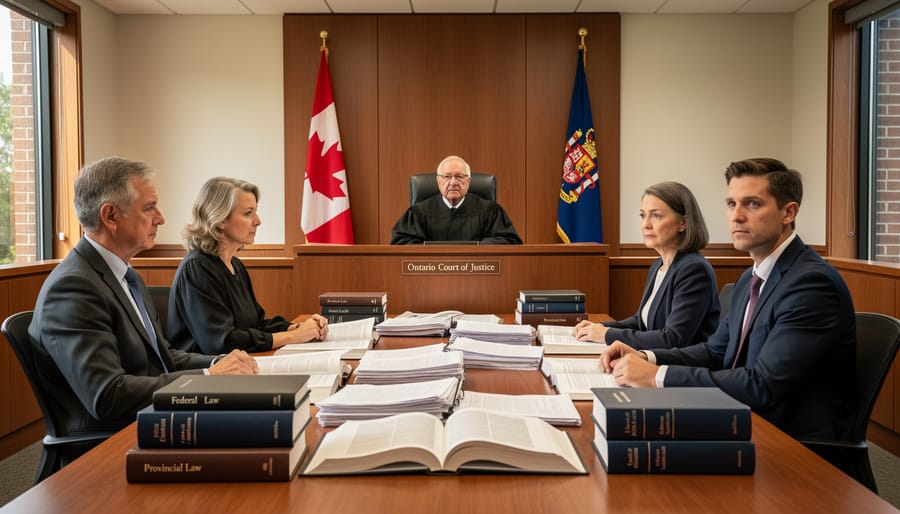
Federal vs. Provincial Jurisdiction
Understanding the division between federal and provincial powers is essential when navigating your divorce. In Canada, the federal Divorce Act governs the legal dissolution of marriage itself, along with child support guidelines and decision-making responsibility (custody). This means the fundamental right to divorce and the framework for supporting your children apply consistently across the country.
However, provinces have exclusive jurisdiction over property division and the specific details of spousal support implementation. Ontario’s Family Law Act determines how your marital home and assets will be divided, which can significantly differ from other provinces. This jurisdictional split matters deeply for your representation because your lawyer must be knowledgeable in both federal divorce law and Ontario-specific family legislation.
When you work with an experienced Ontario divorce lawyer, they understand how these two legal systems intersect in your unique situation. They can guide you through federal requirements while protecting your rights under provincial property laws. This dual expertise ensures nothing falls through the cracks during this challenging time. We offer a free consultation to discuss how federal and provincial laws apply specifically to your circumstances, providing clarity when you need it most.
The Three Grounds for Divorce in Ontario
Under Canadian federal law, there are three grounds for divorce that apply in Ontario: separation, adultery, and cruelty. Understanding which ground applies to your situation is an important first step in beginning your divorce proceedings.
Separation is by far the most common ground for divorce in Ontario. To divorce based on separation, you and your spouse must have lived separate and apart for at least one continuous year. It’s important to note that you can live separately under the same roof if you’re no longer functioning as a married couple—though this can be more complex to prove. The one-year separation period allows time for reflection and potential reconciliation, and you can actually file your divorce application before the full year has passed, as long as the year is complete before the court grants the divorce.
Adultery provides an immediate ground for divorce without waiting for the one-year separation period. However, the spouse claiming adultery cannot be the one who committed it, and proving adultery requires sufficient evidence, which can make the process more emotionally and legally complicated.
Cruelty, whether physical or mental, also allows for immediate divorce proceedings. The cruelty must be severe enough that continuing the marriage would be intolerable. Establishing cruelty requires clear documentation and often professional testimony.
While separation remains the most straightforward path, an experienced family lawyer can help you understand which ground best applies to your circumstances and guide you through the process with compassion and expertise.
Why Legal Representation Matters in Ontario Divorce Cases

The Risks of Self-Representation
While representing yourself in a divorce—known as self-representation—may seem like a cost-effective option, it carries significant risks that can have long-lasting consequences on your financial security and family relationships.
One of the most common pitfalls is missing critical court deadlines. Ontario’s family law system has strict timelines for filing documents, responding to motions, and submitting financial disclosure. A missed deadline can result in losing your right to contest certain issues or having a judge make decisions without hearing your full perspective.
Procedural errors represent another substantial risk. The family court system operates under complex rules of procedure and evidence. Without legal training, individuals often submit improperly formatted documents, fail to serve papers correctly, or inadvertently waive important rights. These mistakes can delay your case for months or even result in unfavorable rulings that cannot be easily reversed.
Perhaps most concerning is the risk of accepting an inequitable settlement. Without understanding the full scope of your entitlements under Ontario law—including spousal support calculations, proper property valuation, and equalization payments—you may agree to terms that significantly disadvantage you financially for years to come.
A former client shared with us: “I thought I could handle things myself, but I didn’t realize what I was entitled to until it was too late. I wish I had sought professional guidance from the start.”
We offer free consultations to help you understand your rights and options before making decisions that could impact your future. Having experienced legal counsel ensures your interests are protected throughout the process.
When Legal Representation Becomes Essential
While some couples successfully navigate straightforward divorces independently, certain circumstances demand professional legal representation to protect your rights and interests. Understanding when to seek legal counsel can prevent costly mistakes and ensure fair outcomes during this challenging transition.
High-conflict divorces where communication has broken down require skilled legal advocacy. When interactions with your spouse consistently escalate into disputes, a lawyer becomes your essential advocate, managing communications and negotiations on your behalf while reducing emotional stress.
Complex financial situations particularly benefit from legal expertise. If your marital estate includes multiple properties, investments, pension plans, or significant debt, accurately valuing and dividing these assets requires comprehensive legal knowledge. Business ownership adds another layer of complexity—determining business valuation, protecting operational continuity, and ensuring fair division demands specialized legal guidance.
International elements create jurisdictional challenges that necessitate professional representation. If you or your spouse live outside Canada, own foreign assets, or face cross-border child custody concerns, navigating multiple legal systems requires experienced counsel familiar with international family law.
Child custody disputes represent perhaps the most critical area requiring legal support. When you and your spouse cannot agree on parenting arrangements, decision-making responsibilities, or access schedules, a lawyer ensures your children’s best interests remain central while protecting your parental rights.
“Having a lawyer gave me peace of mind during the most difficult time of my life. They handled the complexity while I focused on my children,” shares one client who navigated a contested custody matter.
Consider booking a free consultation to discuss your specific circumstances and determine whether professional representation would benefit your situation.
Choosing the Right Divorce Lawyer in Ontario
What to Expect from Your Initial Consultation
Your initial consultation is an important first step toward understanding your legal options and finding the right representation for your divorce. Most family law firms in Ontario offer a free initial consultation, typically lasting 30 to 60 minutes, where you can discuss your situation confidentially and without obligation.
To make the most of this meeting, bring relevant documents including your marriage certificate, any existing separation agreements, financial records such as recent tax returns and pay stubs, property ownership documents, and information about assets and debts. If children are involved, bring details about their schooling, healthcare needs, and current custody arrangements. Having this information readily available helps your lawyer assess your case more efficiently.
Prepare questions in advance about the lawyer’s experience with cases similar to yours, their approach to negotiation versus litigation, expected timelines, and fee structures. Be ready to discuss your goals regarding property division, spousal support, and child custody arrangements. This is your opportunity to understand not only the legal process but also whether the lawyer’s communication style and values align with yours.
During the consultation, your lawyer will listen carefully to your circumstances, explain how Ontario divorce laws apply to your specific situation, and outline potential strategies moving forward. They’ll assess the complexity of your case and provide realistic expectations about outcomes and costs. Remember, this meeting is as much about you evaluating the lawyer as it is about them understanding your needs. Come prepared with honesty and openness, allowing the lawyer to provide you with the most accurate guidance for your unique situation.
Understanding Legal Fees and Cost Structures
Understanding how divorce lawyers charge for their services helps you plan financially during an already challenging time. In Ontario, family lawyers typically use three main billing approaches, each with distinct advantages depending on your situation.
| Fee Structure | Typical Range | What It Covers |
|---|---|---|
| Hourly Rate | $250 – $600+ per hour | All work performed, billed in increments (usually 6 or 10 minutes) |
| Retainer Fee | $3,000 – $15,000+ | Upfront deposit against future hourly charges; replenished as depleted |
| Flat Fee | $1,500 – $5,000+ | Specific services like uncontested divorce or document preparation |
Most divorce lawyers in Ontario bill hourly and require a retainer upfront. This retainer acts as a security deposit held in trust, with your lawyer drawing from it as they work on your case. You’ll receive detailed invoices showing time spent on calls, emails, court appearances, and document preparation. When the retainer runs low, you may need to replenish it.
For straightforward, uncontested divorces, some lawyers offer flat-fee arrangements that provide cost certainty. This works well when both parties agree on major issues and minimal court involvement is expected.
During your free consultation, ask for a written fee agreement outlining rates, billing practices, and estimated total costs based on your circumstances. A transparent lawyer will help you understand potential expenses and explore payment options that fit your budget, ensuring you can access quality representation without financial surprise.
How Lawyers Navigate Key Divorce Issues in Ontario
Child Custody and Access Arrangements
When facing divorce, protecting your relationship with your children becomes paramount. Ontario’s family law system prioritizes the best interests of children above all else, and experienced family lawyers understand how to present your case within this framework to safeguard your parental rights.
The best interests of the child standard considers numerous factors, including each parent’s ability to meet the child’s physical and emotional needs, the child’s established routines, relationships with siblings and extended family, and in some cases, the child’s own preferences. Your lawyer will help you document and demonstrate your active involvement in your children’s lives, from daily care routines to educational engagement and extracurricular activities.
Custody arrangements in Ontario can take various forms. Decision-making responsibility (formerly called custody) determines who makes major decisions about your child’s education, health care, and religious upbringing. Parenting time (formerly access) establishes when your child spends time with each parent. These arrangements can be sole or shared, and your lawyer will advocate for the structure that best protects your relationship while serving your child’s wellbeing.
Developing effective custody and access arrangements requires careful consideration of practical factors like work schedules, geographic proximity, and each parent’s capacity to facilitate the child’s relationship with the other parent. Your lawyer will negotiate terms that are both legally sound and realistically sustainable, addressing everything from holiday schedules to communication protocols.
We understand how deeply these matters affect your family’s future. Our experienced family law team offers a free consultation to discuss your specific situation and explain how we can help you achieve custody arrangements that preserve the precious bond with your children.
Spousal Support Determinations
Determining spousal support in Ontario involves careful consideration of multiple factors, and understanding how these calculations work can help you approach negotiations with realistic expectations. While the federal Divorce Act governs entitlement to spousal support, the actual amounts are calculated using a more nuanced approach.
In Ontario, courts and family lawyers rely heavily on the Spousal Support Advisory Guidelines (SSAG), though these are advisory rather than mandatory. The SSAG use mathematical formulas that consider the length of your marriage, both parties’ incomes, and whether there are dependent children. These guidelines provide a range of possible support amounts and durations, giving families a predictable framework for negotiations.
However, support determinations are never simply about plugging numbers into a formula. Your lawyer will assess whether spousal support is appropriate based on factors like your financial need, your spouse’s ability to pay, the roles each of you played during the marriage, and any economic advantages or disadvantages resulting from the marriage or its breakdown. For instance, if you sacrificed career advancement to raise children, this significantly impacts support considerations.
Experienced family lawyers play a crucial role in negotiating fair support arrangements that reflect your unique circumstances. They can identify when support calculations fail to account for special expenses, hidden income, or future earning potential. Equally important, they challenge unreasonable support demands by presenting compelling evidence about actual financial circumstances and needs.
“My lawyer helped me understand that the support amount my ex was requesting was well above the guidelines,” shares one client. “She negotiated a fair arrangement that allowed me to maintain stability while meeting my obligations.”
If you’re facing spousal support questions, whether as a potential recipient or payor, professional legal guidance ensures your rights are protected. Contact us today for a free consultation to discuss your specific situation and explore your options with compassion and clarity.
Property Division Under Ontario Law
In Ontario, divorce doesn’t mean a simple 50/50 split of everything you own. Instead, the law follows a principle called equalization of net family property, designed to ensure both spouses leave the marriage on equal financial footing. Understanding this process can feel overwhelming, but with proper legal guidance, you can navigate it with confidence and clarity.
The equalization process begins by calculating each spouse’s net family property. This involves determining the value of all property owned on the date of separation, minus the value of property owned on the date of marriage (excluding gifts and inheritances received during the marriage). The spouse with the higher net family property typically pays half the difference to the other spouse, creating an equal division of the wealth accumulated during the marriage.
What gets included? Generally, the matrimonial home always forms part of the calculation, regardless of when it was purchased. Other assets include bank accounts, investments, pensions, business interests, and vehicles. However, certain items are excluded, such as inheritances or gifts received during the marriage from third parties, provided they haven’t been mixed with other marital assets. Life insurance proceeds and personal injury settlements may also be excluded.
Accurate valuation is crucial to ensuring fairness. Business valuations, pension assessments, and real estate appraisals require specialized knowledge. Without experienced legal representation, you risk undervaluing or overlooking assets, potentially costing you thousands of dollars. A knowledgeable family lawyer ensures every asset is properly identified, valued, and accounted for in your settlement.
Many clients have shared how relieved they felt having an advocate who could explain their entitlements clearly and fight for their fair share. You don’t have to face this complex process alone. Contact us today for a free consultation to discuss your property division concerns and learn how we can protect your financial future.

The Divorce Process: What Your Lawyer Does for You

Negotiation and Alternative Dispute Resolution
Divorce doesn’t always require a courtroom battle. In Ontario, experienced family lawyers frequently employ alternative dispute resolution methods to help couples reach agreements that preserve dignity, protect finances, and prioritize children’s wellbeing. These approaches recognize that every family’s situation is unique and that collaborative solutions often serve everyone’s interests better than adversarial litigation.
Mediation involves a neutral third-party mediator who facilitates discussions between you and your spouse to resolve issues like property division, spousal support, and parenting arrangements. Your lawyer can accompany you to mediation sessions, providing legal advice and ensuring any agreement protects your rights. This structured yet flexible process allows you to maintain control over outcomes rather than leaving decisions entirely to a judge.
Collaborative law takes cooperation further. Both parties and their specially trained collaborative lawyers sign an agreement committing to resolve matters outside court. This team-based approach often includes financial specialists and family professionals who provide comprehensive support throughout the process. If collaboration fails and court becomes necessary, both lawyers must withdraw, which creates strong motivation for all participants to reach settlement.
Skilled negotiation remains the cornerstone of most successful divorce resolutions. Your lawyer advocates for your interests through strategic discussions with your spouse’s counsel, working toward fair agreements that reflect Ontario’s legal framework while addressing your specific priorities.
- Significantly lower legal costs compared to lengthy court proceedings.
- Faster resolution allows you to move forward with your life sooner.
- Greater privacy as negotiations remain confidential rather than public record.
- More control over outcomes tailored to your family’s unique needs.
- Reduced emotional stress for you and your children.
- Requires both parties’ willingness to negotiate in good faith.
- May not suit situations involving domestic violence or power imbalances.
- Complex asset disputes sometimes need court intervention for resolution.
- Settlement terms cannot be appealed like court judgments can be.
These alternative approaches save considerable time, money, and emotional energy while often achieving outcomes that satisfy both parties better than court-imposed decisions. A compassionate family lawyer will assess whether alternative dispute resolution suits your circumstances and guide you toward the most effective path forward.
Consider scheduling a free consultation to discuss which approach aligns with your situation. Many clients share that choosing mediation or collaborative law transformed what they feared would be a devastating process into an opportunity for respectful closure and positive co-parenting foundations.
Court Representation When Necessary
While many divorce cases in Ontario reach resolution through negotiation or mediation, some circumstances require formal court intervention. When communication breaks down, significant disputes arise over custody or property division, or one party refuses reasonable settlement terms, skilled court representation becomes essential to protecting your rights and interests.
Experienced family law lawyers understand that courtroom proceedings follow specific procedures and rules of evidence. They prepare your case methodically, gathering documentation, consulting experts when needed, and developing persuasive legal arguments tailored to Ontario’s Family Law Act and federal Divorce Act provisions. Your lawyer presents evidence strategically, cross-examines witnesses effectively, and responds to opposing counsel’s arguments in real-time—skills developed through years of courtroom practice.
The courtroom environment can feel overwhelming during an already stressful life transition. Having an advocate who knows how judges typically approach custody determinations, spousal support calculations, and property equalization provides invaluable peace of mind. Your lawyer anticipates potential challenges, prepares you for testimony, and ensures the court understands your perspective clearly and compellingly.
“My lawyer’s courtroom experience made all the difference. She knew exactly how to present my case and what the judge needed to hear. I felt confident knowing someone was fighting for my children’s best interests.” – Former Client
Courtroom experience matters because divorce outcomes have lasting consequences for your financial security and family relationships. Don’t face these critical proceedings alone. Contact us today for a free consultation to discuss how our proven courtroom advocacy can help secure the best possible outcome for your situation.
Common Questions About Legal Representation in Ontario Divorces
Do I really need a lawyer for my divorce in Ontario?
While Ontario law doesn’t require legal representation, having a divorce lawyer ensures your rights are protected, particularly when dealing with complex property division, child custody arrangements, or spousal support. A knowledgeable lawyer can prevent costly mistakes and help you achieve a fair settlement that considers your long-term interests.
How long will my divorce take in Ontario?
Uncontested divorces where both parties agree on terms typically take 4-6 months to finalize, while contested divorces can extend from 12 to 36 months depending on complexity and whether issues proceed to trial. Your lawyer will provide a realistic timeline based on your specific circumstances during your initial consultation.
What if I can’t afford a lawyer?
Many Ontario divorce lawyers offer flexible payment arrangements, including payment plans and flat-fee options for specific services. You may also qualify for Legal Aid Ontario if you meet income eligibility requirements, or consider limited scope representation where lawyers assist with only certain aspects of your case.
Can I change lawyers if I’m not satisfied?
Yes, you have the right to change legal representation at any point during your divorce proceedings. However, it’s important to discuss concerns with your current lawyer first, as open communication often resolves misunderstandings and prevents delays in your case.
How often will my lawyer communicate with me?
Communication frequency varies based on case activity, but your lawyer should respond to inquiries within 24-48 business hours and provide regular updates when significant developments occur. Establishing clear communication expectations during your first meeting helps ensure you stay informed throughout the process.
Understanding what to expect when working with divorce lawyers helps alleviate anxiety during an already challenging time. Many people worry about legal costs, but transparent lawyers discuss fees upfront and provide written retainer agreements outlining all expenses. Don’t hesitate to ask detailed questions about billing practices, hourly rates, and what services are included during your free consultation.
The attorney-client relationship thrives on trust and open dialogue. Share all relevant information with your lawyer, even details that feel uncomfortable or embarrassing, as complete transparency enables them to build the strongest possible case for you. Remember that everything you discuss is protected by solicitor-client privilege, creating a safe space for honest conversation about your concerns and goals for your post-divorce future.
Navigating divorce in Ontario can feel overwhelming, but you don’t have to face this challenging time alone. Understanding your rights under Ontario’s divorce laws is the first step toward protecting yourself, your children, and your financial future. With knowledgeable legal representation by your side, the complex legal processes surrounding property division, child custody, and spousal support become more manageable and less intimidating.
The decisions you make during your divorce will have lasting implications for years to come. Having an experienced family law professional who understands the nuances of Ontario legislation ensures that your interests are properly represented and that you’re making informed choices at every stage. Your lawyer serves not only as your legal advocate but also as a guide who can explain your options clearly, help you anticipate challenges, and work toward outcomes that serve your best interests and those of your family.
Every divorce situation is unique, with its own set of circumstances, concerns, and goals. What works for one family may not be appropriate for another, which is why personalized legal guidance is so valuable. A skilled divorce lawyer takes the time to understand your specific situation and develops a strategy tailored to your needs.
Taking the first step doesn’t have to be difficult. We invite you to schedule a free consultation to discuss your situation in confidence. During this initial meeting, you’ll gain clarity about your legal standing, learn about your options, and discover how professional representation can help you move forward with confidence toward a new chapter in your life.